How Lymphatic Drainage Works (And Why Your Body Depends On It)
The lymphatic drainage system is one of the most important and least understood systems in the human body. While most people are vaguely aware of ‘lymph nodes’ from conversations about illness, very few understand what the lymphatic system actually does — and even fewer realise that it can stop working effectively, with serious consequences for health, immunity, and even appearance.
In this guide, we explain exactly how lymphatic drainage works, what happens when the system becomes sluggish, and how manual lymphatic drainage techniques — including at-home body rolling — can restore optimal function.
What Is the Lymphatic System or Lymphatic drainage?
The lymphatic drainage system is a network of vessels, nodes, and organs that runs parallel to your circulatory system throughout your entire body. Unlike blood, which is actively pumped by the heart, lymph fluid moves entirely passively — carried by a combination of:
- Skeletal muscle contractions
- Breathing and diaphragm movement
- The one-way valves within lymphatic vessels
- External pressure from manual lymphatic drainage or massage
The lymphatic system performs several functions that are essential to life:
- Fluid balance — it collects approximately 3 litres of protein-rich fluid that leaks from the blood capillaries into surrounding tissues each day, and returns it to the bloodstream
- Immune surveillance — lymph nodes filter lymph fluid and are home to immune cells (lymphocytes) that identify and destroy pathogens, abnormal cells, and cellular debris
- Fat absorption — specialised lymphatic vessels in the small intestine (lacteals) absorb dietary fats and fat-soluble vitamins and transport them to the bloodstream
- Waste clearance — metabolic waste products, excess proteins, and toxins are collected from tissues and transported for elimination
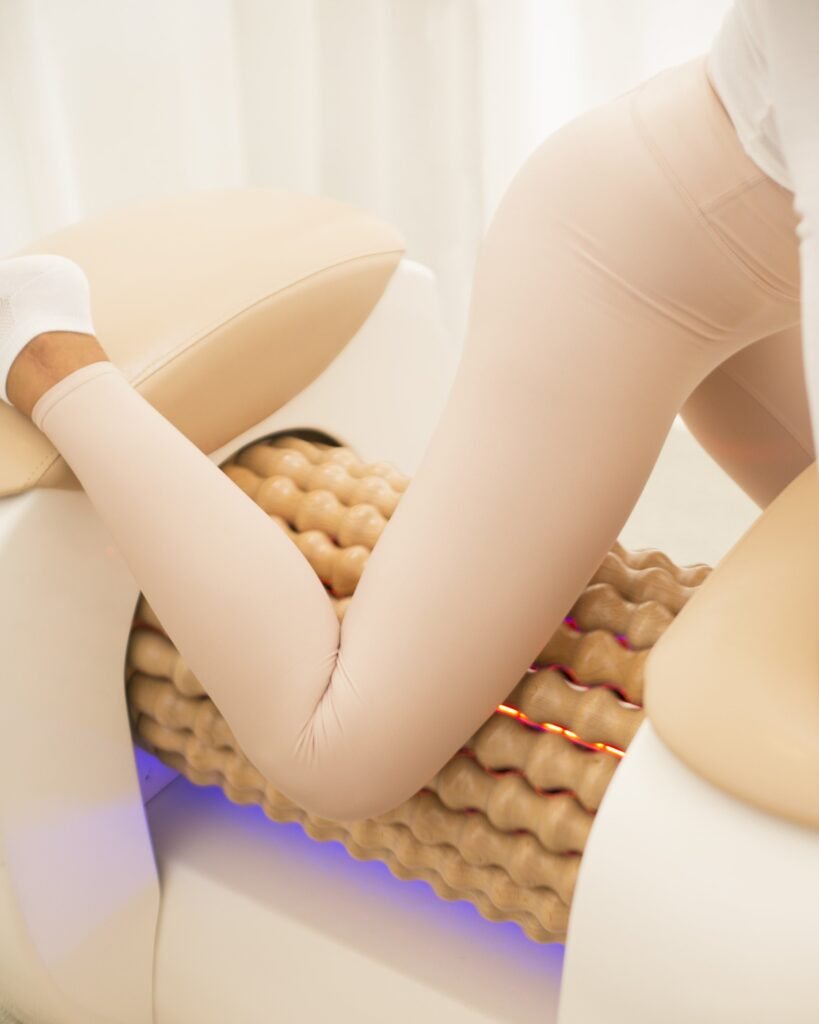
How Lymphatic Drainage Works: The Step-by-Step Process
Understanding the mechanics of lymphatic drainage helps explain why manual lymphatic techniques are so effective. Here’s what happens when the system is working correctly:
Step 1: Capillary Filtration
Blood plasma (the fluid component of blood) constantly leaks out of blood capillaries into the surrounding tissue. This is normal and necessary — the fluid carries nutrients, oxygen, and immune cells to every cell in the body. However, approximately 15% more fluid enters the tissues than returns directly to the capillaries.
Step 2: Lymphatic Uptake
This excess fluid — now called interstitial fluid — is taken up by tiny, blind-ended lymphatic capillaries (lymphatic capillaries are open at one end, allowing fluid to enter but not flow back out). The fluid is now called lymph.
Step 3: Transport Through Lymphatic Vessels
Lymph is carried through progressively larger lymphatic vessels. These vessels have one-way valves that prevent backflow, and segments between valves (called lymphangions) contract rhythmically — a weak pumping action that moves the fluid forward.
This transport depends critically on movement: muscle contractions physically compress the vessels, squeezing lymph forward with each contraction.
Step 4: Filtration Through Lymph Nodes
Lymph passes through lymph nodes — small, bean-shaped structures concentrated in the neck, armpits, groin, abdomen, and chest. Inside each node, immune cells (macrophages and lymphocytes) filter out:
- Bacteria and viruses
- Abnormal cells (including cancer cells, which is why swollen lymph nodes are a diagnostic signal)
- Dead cells and cellular debris
- Foreign particles
Step 5: Return to the Bloodstream
Filtered lymph from the lower body, left arm, and left side of the head drains into the thoracic duct — the largest lymphatic vessel — which empties into the left subclavian vein near the heart. Lymph from the right side of the head, right arm, and right chest empties into the right lymphatic duct, which drains into the right subclavian vein.
The fluid is now back in the bloodstream, completing the circuit.
What Happens When Lymphatic Drainage Is Impaired?
When the lymphatic system can’t keep up with its filtration and transport responsibilities, fluid accumulates in the tissues. This condition is called lymphoedema when severe, or subclinical lymphatic stasis when mild. Symptoms include:
- Visible puffiness and swelling, particularly in the legs, ankles, face, and hands
- A feeling of heaviness or achiness in the limbs
- Skin that feels tight or firm due to trapped fluid
- Increased susceptibility to illness — as immune function depends on effective lymph filtration
- Fatigue and brain fog — metabolic waste accumulates in tissues when lymph isn’t clearing efficiently
- Worsening appearance of cellulite — fluid retention directly amplifies the dimpled appearance
Common causes of impaired lymphatic function include:
- Prolonged sitting or sedentary lifestyle — without muscle movement, lymph barely moves
- Dehydration — lymph fluid becomes more viscous and difficult to transport
- Post-surgical swelling — lymphatic vessels are often cut during surgery, temporarily disrupting drainage
- Chronic inflammation — inflammatory proteins can clog lymphatic vessels
- Tight clothing — particularly around the groin and armpits, which can compress lymphatic vessels
What Is Manual Lymphatic Drainage?
Manual Lymphatic Drainage (MLD) is a specialised massage technique developed in the 1930s by Danish therapists Emil and Estrid Vodder. Unlike deep tissue massage, MLD uses extremely light, rhythmic, pumping strokes that stretch the skin in the direction of lymphatic flow.
The specific pressure and direction of MLD strokes are designed to:
- Stimulate the opening of the initial lymphatic capillaries (which respond to skin stretch, not deep pressure)
- Activate the intrinsic pumping action of the lymphangions
- Manually move lymph through the vessel network in the correct direction
- Reduce swelling and tissue congestion in specific areas
Clinical MLD is used therapeutically for lymphoedema, post-surgical recovery, lipoedema, fibromyalgia, and chronic inflammatory conditions. However, lighter versions of lymphatic stimulation — well within reach at home — offer meaningful benefits for everyday wellness.
How to Stimulate Lymphatic Drainage at Home
1. Body Rolling for Lymphatic Drainage
A body roller used with light-to-moderate pressure in the correct direction is one of the most accessible ways to stimulate lymphatic flow at home. The rolling pressure stretches the skin and compresses the superficial lymphatic capillaries, pushing lymph forward through the vessels. Key technique for lymphatic rolling:- Use lighter pressure than you would for muscle recovery — lymphatic capillaries are just below the skin surface
- Roll toward the nearest lymph node grouping: up the legs toward the groin, up the arms toward the armpits, up the neck toward the sub-mandibular nodes
- Use long, sweeping strokes rather than short, concentrated pressure
- Roll slowly — approximately 5cm per second
2. Rebounding (Mini Trampoline)
The vertical acceleration and deceleration of rebounding creates a gravitational force on every cell and lymphatic vessel in the body. Each bounce effectively squeezes and releases the lymphatic vessels, producing a powerful whole-body pumping effect. Even 10 minutes of gentle bouncing is associated with meaningful increases in lymphatic flow.3. Diaphragmatic Breathing
Deep belly breathing creates significant pressure differentials in the thoracic cavity that drive lymph through the thoracic duct. Diaphragmatic breathing exercises — inhale for 4 counts expanding the belly, exhale for 8 counts — are a simple but clinically recognised lymphatic stimulation technique used in rehabilitation settings.4. Movement and Walking
Every skeletal muscle contraction compresses lymphatic vessels and pushes lymph forward. Walking is one of the most efficient lymphatic drainage activities available. Even a 20-minute daily walk significantly increases lymphatic flow compared to sedentary baseline.5. Cold and Warm Hydrotherapy
Alternating between warm and cold water during a shower causes cycles of vasodilation and vasoconstriction in the blood and lymphatic vessels — essentially creatingFrequently Asked Questions
How does lymphatic drainage massage differ from a regular massage?
A: Regular massage targets muscles and uses moderate to firm pressure. Lymphatic drainage massage uses extremely light, rhythmic strokes — barely more than skin-level contact — specifically designed to stimulate superficial lymphatic capillaries. The pressure and techniques are completely different, as are the physiological goals.
Q: How long does it take for lymphatic drainage to work?
A: Many people notice reduced puffiness and a feeling of lightness after a single session. Consistent benefits — particularly for chronic swelling, post-surgical recovery, or cellulite — develop over weeks of regular practice. For active lymphoedema management, clinical MLD typically achieves its main benefits within 4–8 treatment sessions.
Q: Can I do lymphatic drainage massage on myself at home?
A: Yes — self-lymphatic drainage is well-supported in the clinical literature and widely practised. The technique is different from professional MLD but produces meaningful results. Body rolling, gentle skin stretching in the direction of flow, and the other at-home methods described in this article are all safe and effective for most people.
Q: Is lymphatic drainage massage safe during pregnancy?
Gentle lymphatic drainage can be beneficial during pregnancy for managing swelling in the legs and ankles. However, always consult your midwife or obstetrician before starting any new massage routine during pregnancy, as certain areas and techniques are contraindicated.
The Bottom Line
The lymphatic system is your body’s silent guardian — constantly collecting, filtering, and returning fluid and immune cells that keep every tissue in your body healthy. When it functions optimally, you experience better immunity, less swelling, clearer skin, and higher energy. When it stagnates, the consequences manifest throughout the body.
The good news is that the lymphatic system responds quickly to mechanical stimulation. Daily body rolling, regular movement, and conscious lymphatic massage techniques give you meaningful control over your lymphatic health — no clinic visit required.